How Reflective Sheeting Saves Lives at Night
8th Dec 2025
Every year, thousands of people die on the roads after dark. In the United States alone, the National Highway Traffic Safety Administration reports that about 50% of all traffic fatalities occur at night, even though only 25% of driving happens then. Darkness multiplies risk. Headlights help, but they can only reveal what reflects light back to the driver. That’s where reflective sheeting—the unsung hero of nighttime safety—steps in and quietly saves lives.
What Reflective Sheeting Actually Does
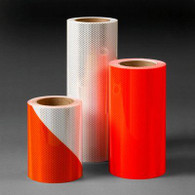
Reflective sheeting is an engineered film coated with tiny glass beads or prismatic elements that bounce light directly back to its source (a phenomenon called retroreflection). When headlights hit a sign, barricade, or vehicle marked with high-quality reflective material, the light returns to the driver’s eyes instead of scattering uselessly in all directions. The result: objects that would otherwise be invisible suddenly pop into view hundreds of feet earlier than they would with paint or ordinary materials.
That extra distance—often 500–1,000 feet—is the difference between stopping in time and a catastrophic collision.
It Makes Road Signs Legible When It Matters Most
Before widespread use of high-intensity reflective sheeting, nighttime sign legibility was abysmal. A 1990s FHWA study found that upgrading signs from older engineering-grade reflective material to prismatic (microprismatic) sheeting increased nighttime recognition distance by 80–100%. Drivers now read “STOP AHEAD” or “SHARP CURVE” soon enough to react instead of slamming on the brakes at the last second.
Real-world proof: After Minnesota converted all its rural stop signs to prismatic reflective sheeting in the early 2000s, intersection crashes dropped by 36% at night.
It Protects Pedestrians and Cyclists
Reflective vests, backpack strips, and shoe tags made with 3M™ Scotchlite™ or similar materials can increase visibility from 500 feet or more. A Swedish study showed that pedestrians wearing reflective markings when walking at night reduced their risk of being hit by 85%. In low-light conditions, the human eye is drawn to movement and bright returning light; reflective gear turns a vulnerable road user into a moving beacon.
It Keeps Construction Workers Alive
Nighttime road work is inherently dangerous. Cones, barrels, and barricades covered in high-intensity prismatic sheeting create a glowing corridor that drivers can follow even when fog, rain, or glare would otherwise blind them. The same material on workers’ vests and hard hats has been credited with dramatic reductions in struck-by incidents.
It Makes Slow-Moving Vehicles Visible from Afar
Farm tractors, horse-drawn buggies, and road-maintenance trucks rarely exceed 25 mph. Without proper markings, they’re nearly invisible on unlit rural roads. The Slow-Moving Vehicle (SMV) emblem—bright fluorescent orange with a red reflective border—has been required in North America since the late 1960s and is estimated to have prevented thousands of rear-end collisions.
It Saves First Responders
Police officers, firefighters, and paramedics often work on high-speed roadways at night. Modern turnout gear and emergency vehicles are covered in wide bands of lime-yellow or orange prismatic reflective material that remains visible even when soaked with rain or covered in dust. Lives have been saved because a driver saw that flashing reflection 800 feet away and moved over in time.
Technology Keeps Getting Better
Today’s best prismatic sheeting (like DG³ from 3M and VIP Diamond Grade from Avery Dennison) return up to 70% of incoming light and remain effective at extreme angles—crucial when a driver is approaching a curved road or a vehicle on the shoulder. Some newer materials even stay bright for 12–15 years with virtually no fade.
A Simple Material, Profound Impact
Reflective sheeting costs pennies per square foot when purchased in bulk, yet it delivers a safety return measured in lives saved and injuries prevented. It requires no power, no maintenance beyond occasional cleaning, and it works 24/7/365.
The next time you’re driving at night and a sign or pedestrian suddenly “lights up” in your headlights, remember that glow isn’t magic. It’s physics, engineering, and a quiet act of lifesaving happening right in front of you.
Stay visible. Stay alive.