
- Home
- Regulatory Signs
- Pedestrian Signs
Pedestrian Signs
Pedestrian Crossing, Yield & Sidewalk Signs
The stark reality is that three out of four pedestrian deaths in the U.S. happen after dark. That solemn fact should shape how you buy pedestrian signage, because a sign that reads well at 2 p.m. but can't be seen at 9 p.m. isn't doing the job you intended. Dornbos Sign & Safety builds MUTCD-compliant pedestrian crossing, yield, and sidewalk signs.
Dornbos pedestrian signage is built on .080 rust-free aluminum with your choice of high-intensity or diamond-grade 3M reflective sheeting, plus solar flashing LED versions for the crossings where reflectivity alone isn't enough.
Dornbos has been making signs for sixty years in Charlotte, Michigan, made in the USA, shipping nationwide in 2–10 business days.
What Signage Signifies Daylighting?
Daylighting means keeping the approach to a crosswalk clear of parked vehicles so drivers and pedestrians can see each other before anyone steps off the curb. A car parked tight to the corner hides a child completely until the moment they're in the lane.
A growing number of states as well as towns currently prohibit parking within a set distance of a crosswalk - commonly 20 feet - and enforce it with parking citations.
The Two-Piece Daylighting Sign Setup
If your jurisdiction has adopted a daylighting rule, or you're a property manager getting complaints about corner parking, the signage required is usually a two-piece reinforcement:
- A no-parking sign marking where the restriction begins, so the rule is enforceable, and in full view of drivers so they can't miss it and claim they didn't know
- A pedestrian crossing yield sign at the point of crossing itself
Daylighting is one of the least expensive pedestrian protection measures available - it's paint, signs, and enforcement rather than road construction.
Before You Order
Check your state statute and local ordinance for the exact distance and sign requirements; they vary, and distances in your city may not match another. See parking signs and the crossing signs on this page.
Which Pedestrian Sign Do You Actually Need?
Four different jobs, four different sign types.
| Sign Type | MUTCD Code | What It Does |
|---|---|---|
| Crossing warning | W11-2 | Yellow or fluorescent yellow-green diamond with the walking figure, posted in advance of and at uncontrolled crosswalks. The workhorse of the category. Fluorescent yellow-green is the standard color for school-area crossings. |
| Yield or stop for pedestrians | R1-5, R1-5A, R1-6 | White regulatory signs stating the driver's legal obligation. R1-6 is the in-street version that stands in the roadway at the crosswalk line. |
| Pedestrian control | R9-8, R9-9, Use Pedestrian Signal | Signs directing pedestrians themselves: use the crosswalk, sidewalk closed, push the button. |
| Shared facility | W11-15 | Bike and pedestrian symbol for trails, shared-use paths, and share-the-road corridors. |
Worth Noting Before You Order
In-street R1-6 signs do take a beating. They actually sit in the travel lane, so plows, delivery trucks, and drivers cutting corners hit them. We advise budgeting for replacements or seasonal removal rather than being surprised in March. They work - driver yielding goes up measurably - but they're a consumable, not a fixture.
Nighttime Visibility Decision-Making
The after-dark number can't really be ignored. It's the reason two types of signage on this page matter most:
1. Reflective Sheeting Grade
Engineer grade is the minimum. High-intensity prismatic returns substantially more light to the driver, and diamond grade more still. On a crossing with no overhead lighting, the sheeting grade is the difference between a driver seeing the sign at 400 feet and seeing it at 150 feet. Every Dornbos pedestrian sign uses high-intensity or diamond-grade 3M.
2. Decide Whether the Sign Needs to Flash
Reflectivity only works when the driver's headlights are pointed at the sign. On curves, crests, wide multi-lane crossings, and any approach where a driver's eyes are elsewhere, a static sign can be perfectly reflective and still get missed. That's when a pedestrian LED sign is needed.
Two More Factors That Change What You Should Specify
- SUVs and pickups account for more than half of pedestrian fatalities. Taller hoods mean larger blind zones directly in front of the vehicle, which argues for signs placed in advance of the crossing rather than only at it.
- Unfortunately, most pedestrian deaths occur where there's no sidewalk, which is a reminder that signage is only one layer of a fix, not the whole fix.
RRFB or Flashing LED Sign - What's the Difference?
This is a question we get asked often, and the answer isn't the same for every site.
An RRFB (rectangular rapid flashing beacon) is a separate beacon unit mounted below a crossing sign, flashing in a rapid irregular pattern, usually pedestrian-activated. FHWA lists it as a proven safety countermeasure, citing crash reductions of up to 47% at uncontrolled marked crosswalks and driver yielding rates as high as 98% in favorable conditions.
A flashing LED sign integrates LEDs into the sign panel itself - the sign face is the beacon. It's a single unit, cheaper, faster to install, and doesn't require a separate beacon assembly.
RRFB vs. Flashing LED Sign at a Glance
| Factor | RRFB | Flashing LED Sign |
|---|---|---|
| Design | Separate beacon unit mounted below the crossing sign | LEDs built into the sign face itself |
| Cost & install | Separate beacon assembly | Single unit, cheaper, faster to install |
| Best for | High-volume uncontrolled crossings on multi-lane arterials | Lower-speed crossings, campus or park paths, subdivisions |
Which Should You Choose?
- For a high-volume uncontrolled crossing on a multi-lane arterial, an RRFB is the better-documented treatment, and you should talk to your traffic engineer about one.
- For a lower-speed crossing, a campus or park path, a subdivision, or a site where you need improved conspicuity without a capital project, a flashing LED sign is the right tool and a fraction of the cost.
Browse pedestrian LED signs and the full solar LED traffic signs range.
Frequently Asked Questions
A yellow or fluorescent yellow-green diamond with a walking figure warns drivers that a pedestrian crossing is ahead or at that location. It's a warning sign, not a regulatory one - it tells drivers to expect people in the roadway. The driver's actual legal duty to yield comes from state law and from white regulatory signs like R1-5 and R1-6.
Daylighting laws prohibit parking within a set distance of a crosswalk - often 20 feet - so drivers and pedestrians can see each other before the pedestrian enters the roadway. Several states and cities have adopted them, and several enforce them with citations. The specific distance, which approaches it applies to, and whether signage is required all vary by jurisdiction, so check your state statute and local ordinance.
Fluorescent yellow-green is the MUTCD standard color for pedestrian, bicycle, and school warning signs, and it's noticeably more conspicuous in low light than standard yellow. Standard yellow remains in service in many places. If you're adding new signs into an existing corridor, keep the color consistent along that corridor - a single odd-colored sign likely reads as an anomaly rather than a warning.
Advance placement depends on approach speed and sight distance, and the MUTCD provides guidance tables rather than a single number. Faster approaches need more distance. Because taller vehicles have larger forward blind zones, advance signs matter more now than they did a decade ago. Your traffic engineer should set the distance; we can help you spec the signs once it's set.
Yes - flashing treatments at uncontrolled crosswalks measurably increase the share of drivers who yield, which is why FHWA lists RRFBs among its proven safety countermeasures. How much improvement you get depends on speed, number of lanes, crossing width, and time of day. A flashing sign is not a substitute for adequate lighting, marked crosswalks, or reasonable speeds.
For many sites, yes. In-street signs sit in the driver's field of view rather than off at the shoulder, and they raise yielding rates. Just plan for them as a consumable: order spares, and in snow country pull them before plow season.
Standard MUTCD pedestrian signs ship in 2–10 business days. Flashing LED units are assembled and tested individually, so lead times run longer - call 1-517-543-4000 for a current delivery date.
Still Have Questions?
Call 1-517-543-4000 and our team will help you match the right pedestrian sign to your crossing.
Fast Nationwide Shipping

Orders take 2-10 business days to ship. Specialty items such as LED Flashing Signs and Roll-Up Signs have extended lead times listed on the product page. Learn more about our shipping and return policy.
University ShopsClick HERE
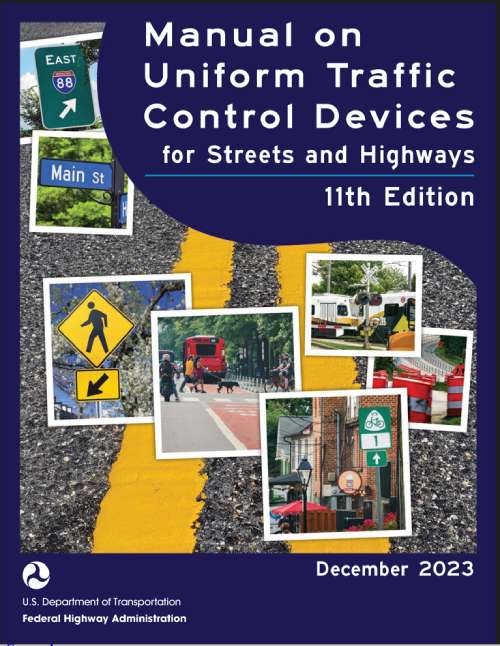
Download Manual
Family Owned & Operated

60 Years in Business
Latest Blog Posts
- The Importance of Consistency in Street Name and Traffic Control Signs: Why Uniform Sizes and Colors Matter.
- Maintaining Traffic Signs in all weather.
- How Reflective Sheeting Saves Lives at Night
- Community Corner: The Power of Clear Signs
- Safe Roads & Strong Communities: A July 4th Message from Dornbos Sign Inc.
- DPWs and County Road Commissions Trust Dornbos Sign Inc.